How to use the concrete calculator
- Choose the shape of the pour.
- Measure length and width in feet (add inches if needed) and thickness in inches.
- Enter how many identical pours you have — for example 6 footings for deck posts.
- Keep a 5–10% waste allowance, then press Calculate.
- Round your ready-mix order up to the increment your supplier sells (often ¼ or ½ yard).
Formula
Slab or footing: volume (ft³) = length (ft) × width (ft) × thickness (in) ÷ 12
Round column: volume (ft³) = π × (diameter in ÷ 24)² × height (ft)
Cubic yards = cubic feet ÷ 27. Bags = cubic feet ÷ bag yield, rounded up, using 0.30 ft³ (40 lb), 0.45 ft³ (60 lb) and 0.60 ft³ (80 lb).
Worked example
A 10 ft × 10 ft patio at 4 in thick: 10 × 10 × (4 ÷ 12) = 33.33 ft³ = 1.23 yd³. With 5% waste that is 35.0 ft³, or 1.30 yd³ — about 59 bags of 80 lb concrete.
Tips for using the concrete calculator
- Measure thickness at several points: a slab that is 4 in on paper is often 4½ in at low spots, which adds about 12% more concrete.
- Round ready-mix orders up to your supplier’s increment (usually ½ or ¼ yard); running short mid-pour leaves a cold joint.
- For bags, buy one or two extra and return unopened ones; spilled and wasted mix adds up on small pours.
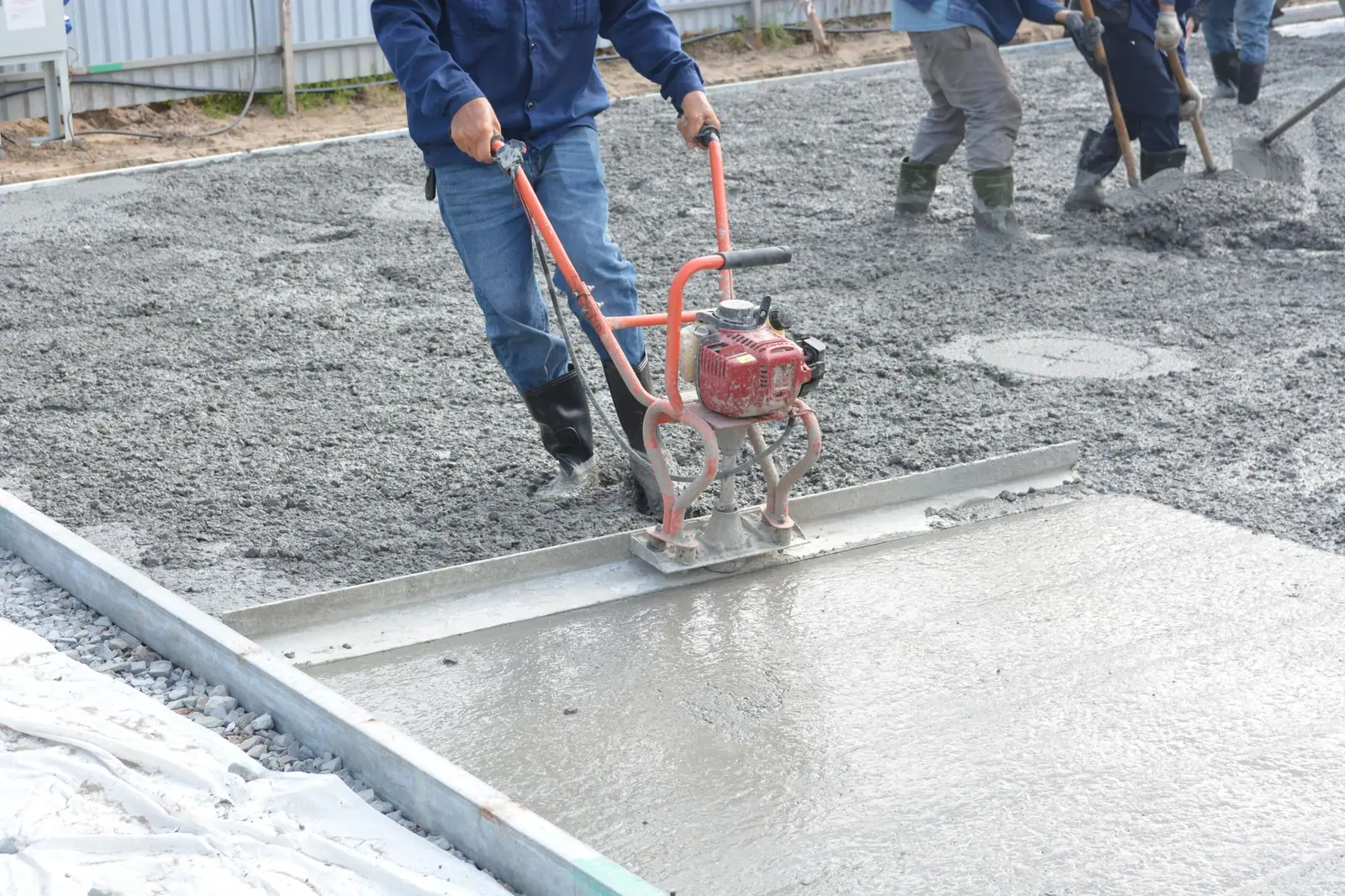
Concrete Calculator FAQs
How many bags of concrete are in a yard?
One cubic yard is 27 ft³. At 0.60 ft³ per 80 lb bag that is 45 bags; at 0.45 ft³ per 60 lb bag it is 60 bags; at 0.30 ft³ per 40 lb bag it is 90 bags — before any waste allowance.
How thick should a concrete slab be?
Four inches is common for patios, walkways and shed floors. Driveways that carry cars are usually 5–6 inches, and anything carrying heavy loads or built on poor soil should follow an engineer's specification and your local code.
Should I order ready-mix or use bags?
Bags make sense for small jobs such as post holes or a stoop repair. Past roughly one cubic yard, ready-mix delivery is usually more practical. Many suppliers charge a short-load fee on small orders, so ask before you order.
How much extra concrete should I order?
Most estimators add 5–10%. Uneven subgrade, form bulges and spillage all consume concrete, and running short mid-pour leaves a cold joint.