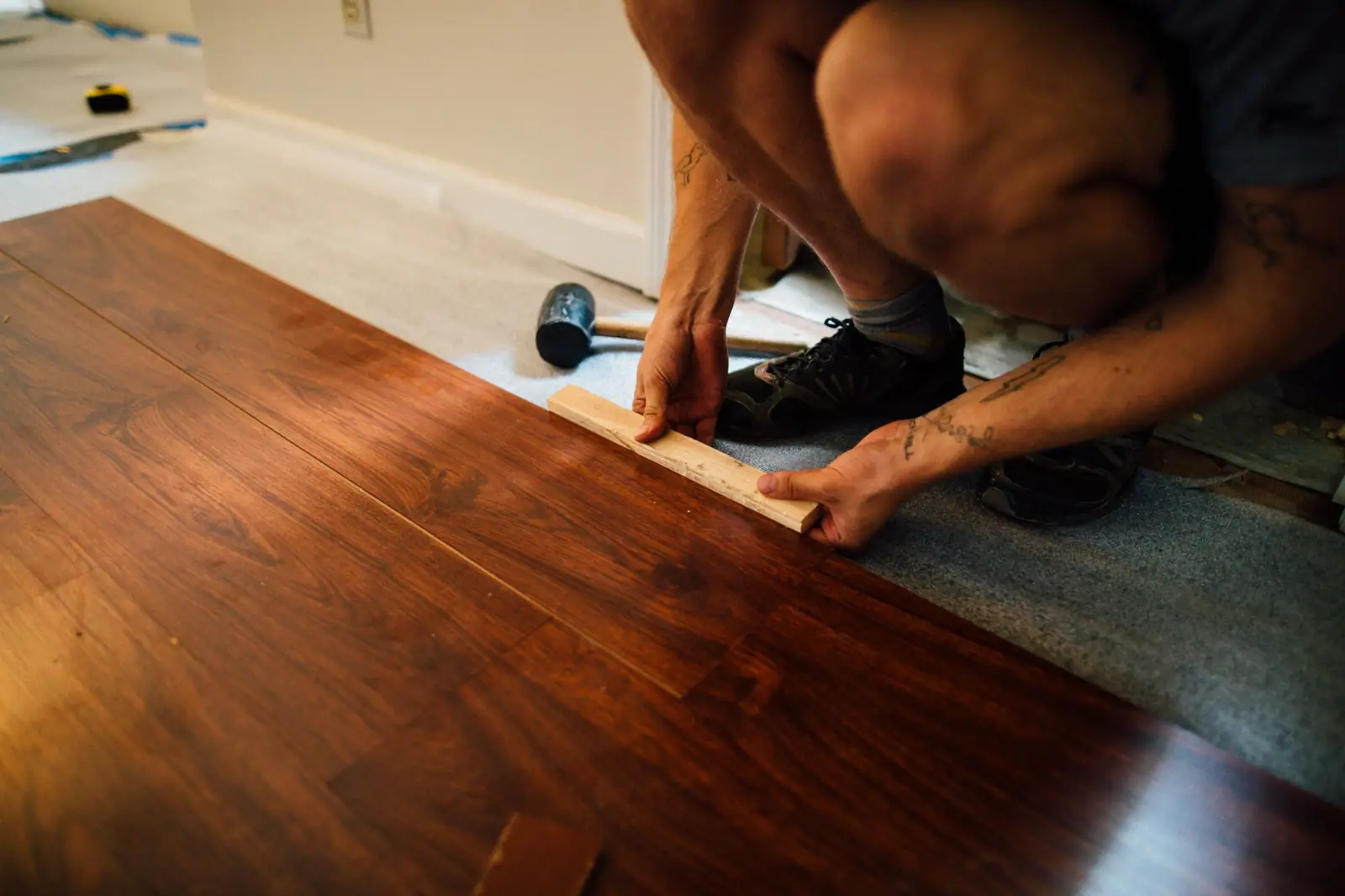
Flooring types
| Material | Best for | Notes |
|---|---|---|
| Luxury vinyl plank (LVP) | Kitchens, basements, rentals | Water-resistant; quality varies by wear layer |
| Laminate | Living areas on a budget | Wood look; most products dislike standing water |
| Engineered hardwood | Most rooms, over concrete | Real wood veneer; more stable than solid |
| Solid hardwood | Above-grade living spaces | Can be refinished many times |
| Porcelain / ceramic tile | Baths, kitchens, entries | Durable and waterproof surface; needs a stiff subfloor |
| Carpet | Bedrooms | Warm and quiet; shorter life |
Flooring installation: measuring and waste factors
Measure each room (including closets), add 5–10% waste for straight layouts and about 15% for diagonal or herringbone, then round up to whole boxes. Use the flooring calculator or, for tile, the tile calculator and grout calculator.
Subfloor preparation before flooring installation
Most flooring failures start below the surface. Installers check that the subfloor is flat within the manufacturer's tolerance, structurally stiff (especially under tile), clean and dry. Concrete slabs should be moisture-tested before wood or many vinyl products. Squeaks are best fixed before the new floor goes down.
Tile layout, grout joints and thinset
Plan tile layout so cut pieces at the walls are balanced and not slivers. Large-format tile needs flatter substrates and the right mortar. Joint width follows the tile's size tolerance — rectified tile allows tighter joints.
Flooring & Tile Installation costs in 2026
Installed costs vary widely by material and prep.
| Item | Typical range |
|---|---|
| Hard-surface flooring, installed | ≈ $5–$25+ per sq ft (LVP/laminate low, engineered mid, solid hardwood high) |
| Removing old flooring | ≈ $1.50–$3.50 per sq ft |
Typical national ranges. New York City and other high-cost metros often run above them — get several written bids for your project.
Calculators for this project
New York rules and permits
NYC. DOB lists resurfacing floors among work that does not require a permit, provided the contractor holds a DCWP Home Improvement Contractor license. In co-ops and condos, flooring changes are often regulated by the building: many require sound-reducing underlayment and rugs covering a large share of floors ("80% coverage" clauses are common). These rules are building-specific — check your proprietary lease, house rules or alteration agreement.
Frequently asked questions
How much does flooring installation cost?
National averages put most professionally installed hard-surface flooring around $5–$25+ per sq ft, with LVP and laminate at the low end and solid hardwood at the high end.
What flooring is best for a basement?
Moisture-tolerant options such as LVP, tile or sealed concrete. Avoid solid hardwood below grade.
Do I need to remove old flooring?
Often, especially carpet or damaged floors; some floating floors can go over a flat existing hard floor. Follow the manufacturer.
How much extra flooring should I buy?
5–10% for straight layouts, about 15% for diagonal or herringbone, plus spares for repairs.